

I Started Drinking Water From a Wine Glass. Here Is Why.
I watched The Plastic Detox on Netflix two weeks ago and I have not looked at my kitchen the same since.
Not because the documentary told me something I had never heard before. I knew plastic was not great. Most of us know that on some level. But knowing something in the background and then sitting with it for ninety minutes while someone walks you through exactly what "not great" looks like inside the human body are two very different experiences.
So I did what I always do when something unsettles me. I started looking around my own house.
And that is when it got overwhelming. Because plastic is not in one place. It is in every place. The food storage containers. The cups. The bags under the sink. The spatulas. The cutting boards. The kids' plates. The bottles I have been drinking water out of every single day without a second thought.
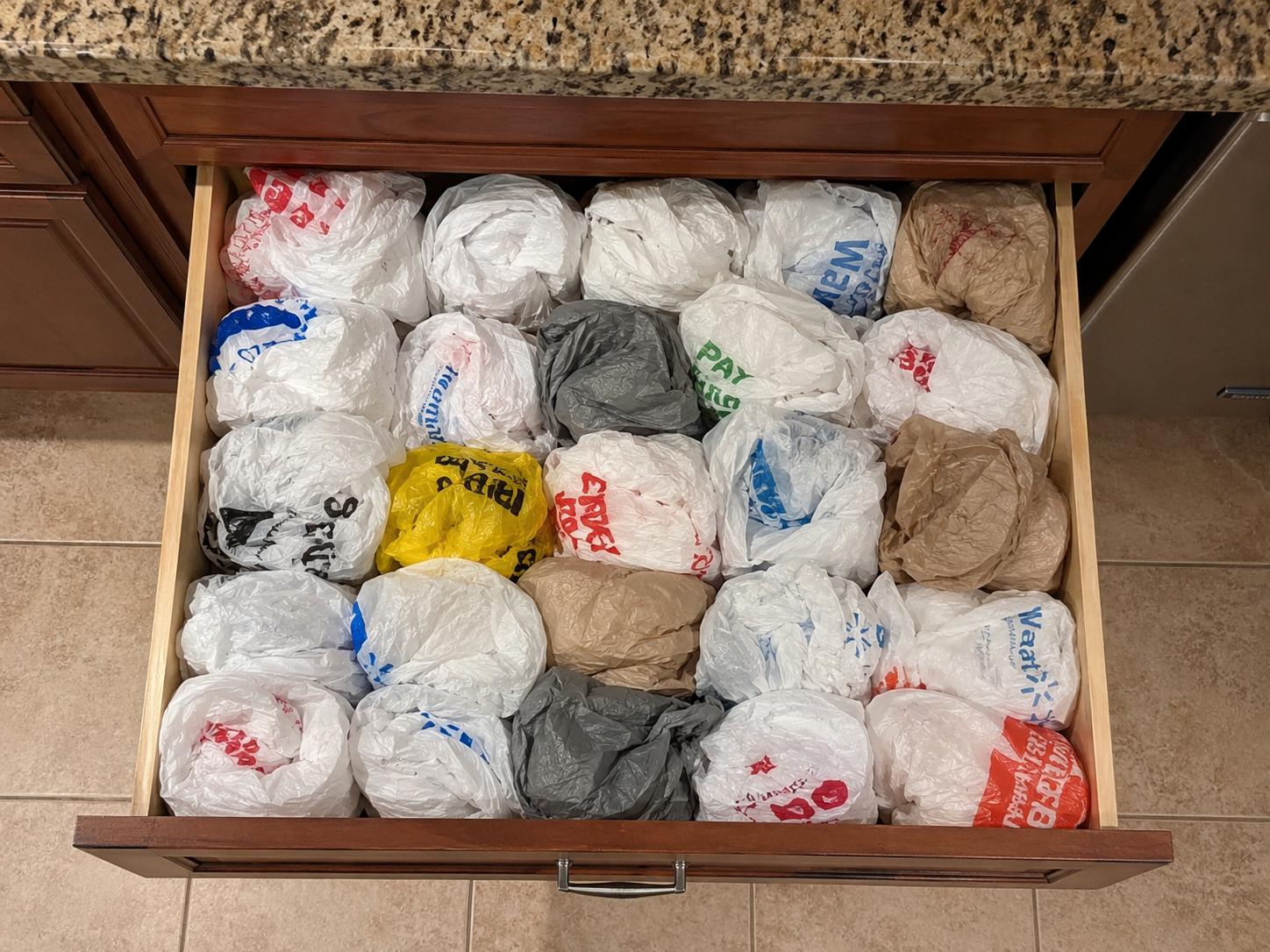
I opened the kitchen drawer, the one stuffed with plastic grocery bags, and I stood there for a minute. Because I keep those bags for the same reason every Black woman I know keeps those bags. My mother kept them. Her mother probably kept them. You come home from the store, you fold the bags, you stuff them in the drawer. Nobody told you to. Nobody needed to. It was already happening before you were old enough to question it.
That is a Sprinkle.
Not the bags themselves. The not-questioning. The way a habit can live in your kitchen for decades without ever being examined, not because you are careless, but because it came wrapped in so much familiarity that it never occurred to you to hold it up to the light.
What the Research Is Starting to Show
Here is what made the Netflix documentary hit different for me.
In April 2026, the U.S. Environmental Protection Agency added microplastics to its Drinking Water Contaminant Candidate List for the first time in the agency's history. A $144 million federal research program called STOMP launched alongside it to study the scope. This came after a 2024 study published in Nature Medicine found microplastic particles in 100 percent of human brain samples examined, with concentrations in brain tissue rising approximately 50 percent between 2016 and 2024.
The science is still developing. No regulatory body has said microplastics at current detected levels definitively cause specific health outcomes. What the research is showing is that the accumulation is real, it is increasing, and the brain appears to concentrate these particles at higher levels than the liver or kidney.
I am not a scientist. But I can read a receipt. And the receipt says the body is collecting something it was never designed to collect, and nobody told us to slow down on the deposits.
Early research has also linked high PFAS exposure, a class of chemicals found in some non-stick and plastic products, to hormonal disruption. A 2025 study covered by Euronews found associations with women's hormonal function specifically. For women already navigating perimenopause, chronic stress, fertility concerns, or any of the physical costs the Ledger tracks, that is not a footnote. That is another line item on an invoice that was already too long.
Where the Plastic Drawer Came From
I did not choose to store food in plastic containers. That was already the setup when I got my first kitchen. The containers were affordable, they stacked, they went in the microwave. Tupperware launched in 1946 and was marketed to women at home parties as a symbol of modern convenience and good housekeeping. By the time I was old enough to have my own kitchen, plastic food storage was not a decision. It was a default.
And here is the part that scared me, the part that made me think about every Black woman I know with that same drawer, those same containers, that same routine.
Convenience was never sold to us neutrally. BIPOC families, families already navigating tighter budgets, fewer choices on the shelf, and less access to the kind of information that gets shared in spaces we were not always invited into, were handed the cheapest, most available option and told it was fine. And then when the research started catching up, nobody circled back to say, "That thing we told you was fine? We need to talk."
Some families were sold exposure and then blamed for the outcome.
That is not a personal failure. That is a cultural inheritance. And the drawer full of plastic bags is just the visible piece of it.
“What was modeled as normal is not the same as what was safe. And noticing the difference is the whole audit”
What the Ledger Shows
The environmental cost. When plastic food containers are heated, they may release microplastic particles and chemical additives into food. Microwaving has been identified in research as a condition that can accelerate this release. The particles are small enough to enter the bloodstream and, as the Nature Medicine study documents, accumulate in tissues including the brain. The container that has been in the cabinet for years, the one that seals and stacks and goes in the microwave because that is what it was bought to do, has been shedding more as it ages. Not less… more.
The financial cost. Glass and stainless steel involve an upfront investment. But the plastic containers were already wearing out, and what they shed as they degrade is not nothing. One quality glass container that lasts for years is both a financial decision and a body decision. This is not a purchase out of fear. It is a replacement of something that was already breaking down.
The inherited cost. The habit of storing and reheating food in plastic was never designed with your body in mind. It was designed for convenience, speed, and shelf price. The women who passed this habit forward were not wrong. They used what they had. They stretched what they could. But the habit is still running, unrevised, in kitchens where the information has changed. And habits that run without revision are exactly what the Ledger is built to catch.
The Detox: One Container. One Wine Glass.
I am not burning the house down. I looked around my kitchen and I could see that if I tried to replace everything at once I would lose my mind and my checking account in the same week. That is not an audit. That is a panic purge. And panic purges do not stick because they are built on fear, not on information.
So here is what I actually did.
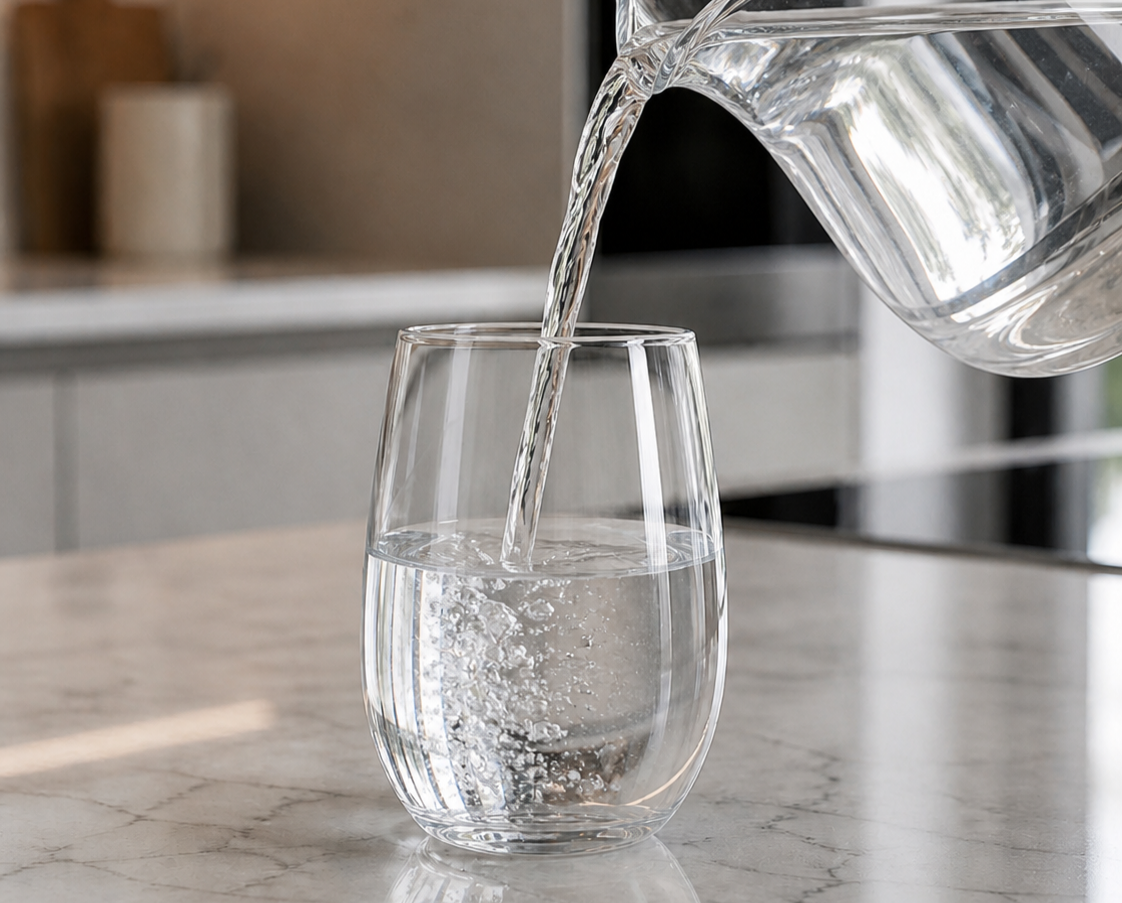
I started drinking water from a wine glass today while I search for a new reusable water bottle.
Disclaimer, a wine glass does not filter microplastics. But because it is glass, it is already in my cabinet, and it costs me nothing to use it instead of reaching for the plastic bottle I have been reaching for on autopilot. It is one swap. It is free. And every time I pick it up I remember that I am making a choice instead of running a program.
That is the whole ask this week. One swap.
Find the one container you heat food in most often. The one that goes in the microwave, the one the leftovers sit in overnight, the one that gets hot when the food gets hot. Replace it with glass or stainless steel.
If cost is a barrier, thrift stores carry glass food storage containers regularly. We do not have to be fancy about the revision, just strategic. This is not a lifestyle rebrand. It is one item off the ledger.
Once we see the cost, we stop paying it blindly. That is the entire job.
The Legacy Question
What else is sitting in your house right now that you kept because someone gave it to you and getting rid of it felt wrong, even though it serves no useful purpose in your life?
The drawer full of bags. The container from before you can remember. The products that touch heat, food, skin, or your children every day that you have never once questioned because questioning them felt like questioning the women who handed them to you.
This is not about shame. This is about stewardship.
Knowing does not make life unbearable. It makes you more conscious of the choices you are making instead of being led and steered by what was handed to you. And consciousness is the beginning of every legacy audit this framework teaches.
One wine glass. One container. One question asked once.
That is how a Sprinkle gets interrupted. Not in a dramatic overhaul, but in one specific, deliberate choice to stop running the program on autopilot.
Love yourself,
Ebony
Share this with someone who needs it
