

It’s Perimenopause.
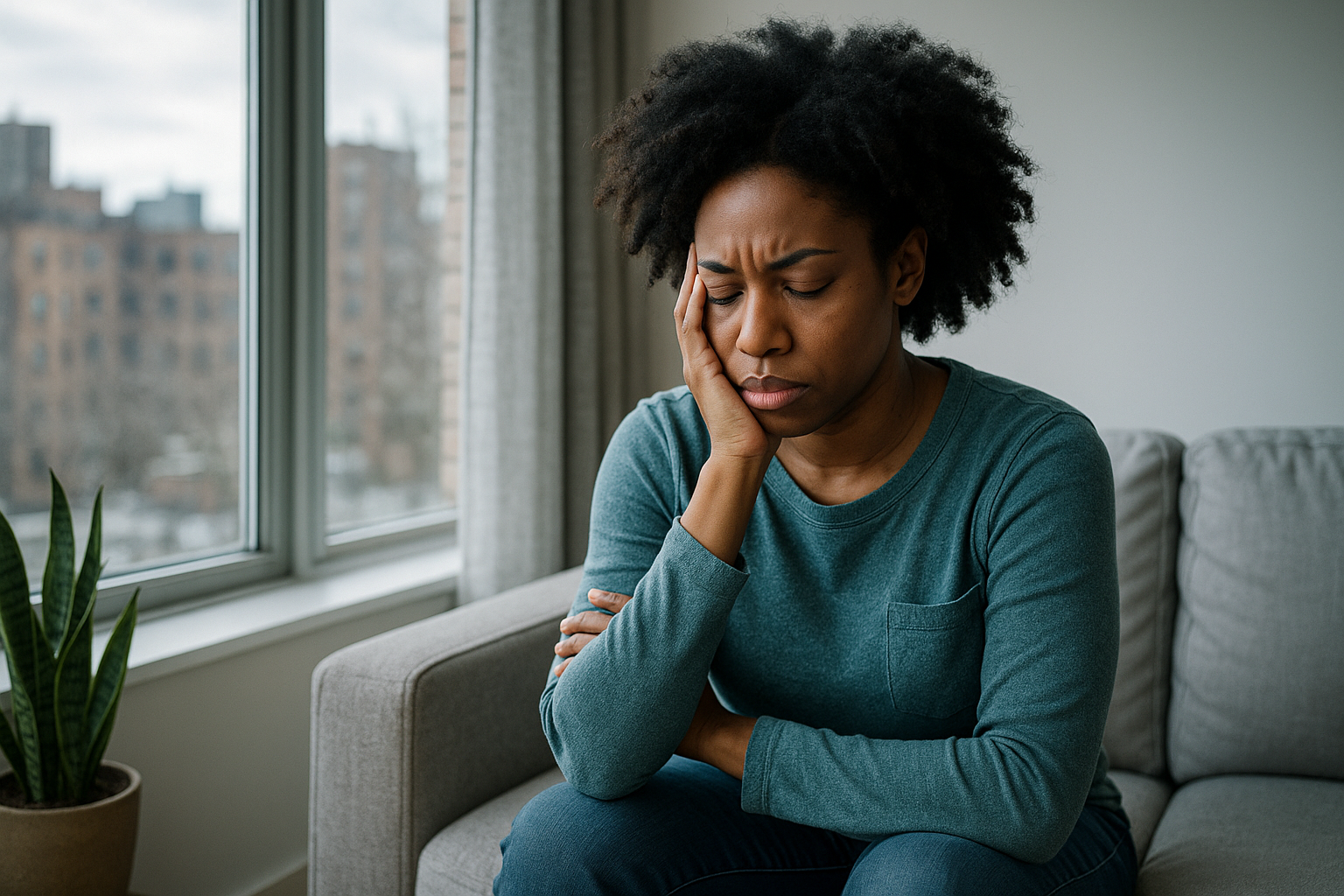
Quick definition
Think of perimenopause as "reverse puberty." It's the transition phase leading up to menopause (the finish line where you haven't had a period for 12 months). During this time, your ovaries are starting to wind down, but they aren't doing it quietly. Instead of a steady decline, your hormones (specifically estrogen and progesterone) fluctuate wildly, causing physical and emotional changes. This phase typically starts in a woman's 40s, but can begin as early as the late 30s.
What it can affect in real life
Perimenopause doesn't just happen in your uterus. It shows up in your boardroom, your bedroom, and your living room.
Work: "Brain fog" can make you feel like you're losing your edge or ambition, known as the "ambition tax." It can lead to anxiety about performance or fear of being perceived as incompetent.
Relationships: A sudden drop in libido (sex drive) or increased irritability can cause friction with partners. The "people-pleasing collapse" happens here. You may find you no longer have the patience to carry the emotional load for everyone else.
The "Sandwich" Squeeze: This often hits right when you're caring for aging parents and raising children. The physical exhaustion from perimenopause makes this caregiving burden feel much heavier.
What it can look like day to day
It's rarely just hot flashes. It's a full-body experience that can feel different every day.
The Cognitive: Walking into a room and forgetting why you're there, or struggling to find simple words (Brain Fog).
The Physical: Waking up drenched in sweat at 3 AM (Night Sweats), feeling like your heart is racing (Palpitations), or experiencing shockingly heavy periods that soak through protection (Flooding).
The Emotional: Going from fine to rage in seconds, or feeling a spike in anxiety that feels unfamiliar and "chemical" rather than situational.
The Structural: For Black women specifically, symptoms often start earlier and last longer (up to 10 years compared to 6.5 years for White women), with a higher intensity of hot flashes.
Why it happens (plain-English biology)
Your brain and your ovaries are in a long-distance relationship, and the cell service is breaking up.
Normally, your brain sends signals to your ovaries to release eggs and produce hormones. In perimenopause, your ovaries stop responding consistently. Your brain shouts louder (releasing more stimulating hormones like FSH) to get the ovaries to work. This results in chaotic spikes and crashes of estrogen.
The Brain Connection: Your brain is packed with estrogen receptors. Estrogen helps your brain use glucose for energy. When estrogen levels crash, your brain essentially has a brownout (a "Brain Energy Squeeze"). This is why you feel foggy, tired, and moody. It's not just "in your head." It's a neurological transition.
What helps (Tier 1, 2, 3)
Tier 1: Lifestyle (The Foundation)
Stabilize Blood Sugar: Eating protein and fiber every 3 to 4 hours prevents energy crashes that mimic hormonal dips.
Lift Heavy Things: Strength training is crucial right now to protect bones and manage weight, more so than long cardio sessions which can spike cortisol (stress hormone).
Sleep Hygiene: Keep the room cool and dark. Sleep is when your brain cleans itself.
Tier 2: Supplements (The Boost)
Magnesium Glycinate: Helps with sleep, anxiety, and muscle relaxation.
Vitamin D & Calcium: Essential for bone health as estrogen declines.
Omega-3s: Great for brain health and reducing joint inflammation.
Tier 3: Medical Intervention (The Big Guns)
Menopause Hormone Therapy (MHT): Previously called HRT. This is the gold standard for treating hot flashes and night sweats. It replaces the hormones your body is losing.
Non-Hormonal Options: For those who cannot take hormones, there are new FDA-approved medications specifically for hot flashes that target the brain's temperature control center.
Tools and resources (optional)
The Menopause Society (formerly NAMS): Use their "Find a Practitioner" tool to find a certified menopause expert near you.
SWAN Study (Study of Women's Health Across the Nation): A massive study that looks at how women from different ethnic backgrounds experience menopause differently.
Symptom Trackers: Apps or journals to log your cycle and symptoms to show your doctor.

You don't have to "tough it out."
When to talk to your doctor
You don't have to "tough it out." See a doctor if:
Bleeding is out of control: You're soaking through a pad/tampon in an hour, or bleeding for more than 7 days.
Mental health dives: You feel hopeless, severely anxious, or like you aren't yourself.
Life is disrupted: Symptoms are messing with your ability to work, parent, or sleep.
Advocacy Tip: If a doctor dismisses you, say: "My symptoms are interfering with my daily function. I would like to rule out hormonal causes. Can we document in my chart that I asked for this and it was declined?"
Tracking prompts
To get the best care, track your data. Ask yourself:
Cycle: How many days was my cycle this month? Was the flow lighter or heavier than my "normal"?
Temperature: How many hot flashes or night sweats did I have today?
Mood: Did I feel rage, tears, or anxiety today that didn't match the situation?
Brain: Did I lose my train of thought or struggle to focus today?
Related terms
Vasomotor Symptoms (VMS): The fancy medical term for hot flashes and night sweats.
Genitourinary Syndrome of Menopause (GSM): A term for vaginal dryness, painful sex, and urinary urgency caused by low estrogen.
Anovulatory Cycle: A menstrual cycle where you bleed, but you didn't actually release an egg. These are common now.
Weathering: The biological impact of systemic stress and racism, which can lead to earlier health declines and earlier menopause for Black women.
FAQs
Q: Am I too young for this? I'm only 36. A: Likely not. Perimenopause can start in the mid to late 30s. Changes in your cycle or sleep are often the first clues, even if you're still getting a period.
Q: Is it Perimenopause or ADHD? A: It could be both. Low estrogen impacts dopamine (the focus chemical). This can make existing ADHD worse or make a neurotypical brain feel like it suddenly has ADHD symptoms.
Q: Can I still get pregnant? A: Yes. Until you've gone 12 full months without a period, you can still conceive. Don't toss the birth control just yet.
Research Transparency & Methodology
I believe that every woman deserves health information rooted in evidence, not just social media trends. To ensure clinical accuracy, the content on this site is developed using a dedicated research workspace where I synthesize data from high-authority medical sources, including:
Longitudinal Studies: Data from the Study of Women’s Health Across the Nation (SWAN), a 25-year multi-racial cohort study tracking the physical and emotional changes of the menopause transition.
Clinical Standards: Official position statements and guidance from The Menopause Society (formerly NAMS) and the International Society for the Study of Women’s Sexual Health (ISSWSH).
Neurological Research: Peer-reviewed studies on brain health and metabolism, including the work of leading neuroscientists like Dr. Lisa Mosconi.
Equity-Focused Data: Insights from the Black Women’s Health Imperative (BWHI) and research on the "weathering hypothesis" to address the specific health disparities faced by Black women in midlife.
My Goal: I do the "heavy lifting" of reviewing research so you can stop second-guessing your symptoms. By putting clinical language to your lived experience, I aim to provide you with the tools necessary to advocate for yourself in the healthcare system and get the care you deserve.
Disclaimer: I am not a doctor. This information is for educational purposes only and does not substitute for professional medical advice. Always consult with a healthcare provider regarding your specific health needs.
Share this with someone who needs it
